Finding the right size is the main piece of purchasing another dog collar. Before you start, you’ll have to figure out what size your dog’s neck is. The most effective way to approach this is to utilize an estimating tape and delicately place it around your dog’s neck. Make a note of the size and afterward add on two inches – then you’ll have your dog’s neck size. It’s vital to ensure you keep this near hand while purchasing a dog collar, as various kinds and makes of collars fluctuate a considerable amount. Thus, a size little in one kind of collar for instance, may not be equivalent to a size little in another sort.
In the event that you don’t know, simply check the item depictions under our dog collars, to figure out the specific measuring. When your dog’s collar is on, you ought to have the option to fit two fingers under serenely. Also, on the off chance that you’re evaluating your doggy for his new collar, you should gauge them each a long time to see what size collar they need – you’ll require multiple! The collar ought to be sufficiently free to allow them to move around and inhale easily, yet not so free that they can pull it straight off over their head!
At the point when you’re prepared to take your dog for a walk or basically have to limit your dog you need a collar that is the most ideal for their variety and character. In this article, we’ve listed and described the 7 types of dog collars.
#1 Flat Dog Collars
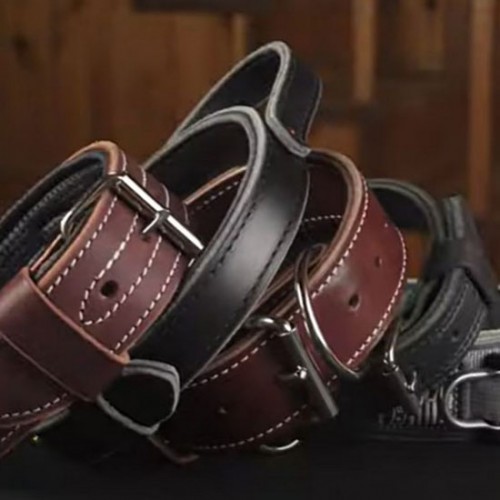
The most widely recognized sort of collar, and maybe what might strike a chord first, is the flat collar. With its straightforward, essential plan, the flat collar circles around your dog’s neck and closes with a plastic catch. These collars ordinarily accompany D-rings for joining recognizable proof and significant labels.
#2 Chain or Choke Collars
This should address a dog’s undesirable way of behaving, for example, leaving the “heel” position. Pulling harder or longer on the choke chain pushes on the dog’s windpipe and additionally larynx and may confine relaxing.
#3 Prong or pinch Collars
Prong collars, likewise called pinch collar, are a progression of metal connections that fit together by interfacing through unpolished prongs that point internal toward the dog’s neck. The plan of the prong collar integrates a chain circle interfacing the closures of the prong series, with the end goal that it has a restricted boundary (a martingale), not at all like choke chains, which don’t have a breaking point on how far they can contract on a dog’s neck.
#4 Head Collars
Head collars, otherwise called head halters, are particularly useful for keeping your dog zeroed in on strolling straight ahead. It slips over your dog’s nose and appends behind the ears. Ideal for delicately preparing your dog to stroll without pulling, this style of collar diverts your dog’s consideration, as it basically focuses your dog’s head in where you need to head. Naturally, where the head goes, the body follows.
#5 Smart Collars
The Series 2 Fi Smart Dog Collar includes another GPS receiving wire for unrivalled area following in distant regions, a superior LTE radio wire for quicker get away from cautions, supported equipment for solid rope pullers, and another rest following component.
#6 Dog Harness
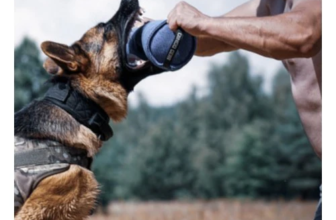
Intended to diminish pressure on your dog’s neck, a harness slips around your dog’s front legs and snaps shut behind the upper piece of your dog’s back. With just enough training, your dog might step into the harness straight forwardly. Then you snap it together and cut the leash to either a clasp situated on the chest or the back. Certain harnesses can give you the two choices.
#7 Martingale collars
A martingale collar otherwise called a restricted slip collar, the martingale collar is a cross between a slip collar and a standard collar. Martingales permit you to have more noteworthy command over your dog without choking them.
Collar versus Harness: Which is better for dogs?
While perusing dog collars, you may likewise be thinking about getting a harness for your dog. These can be an extraordinary answer for a wide range of reasons:
- They’re perfect in the event that your dog is still in preparing as they help them not to get so diverted.
- They help to prevent your dog from pulling or hopping while making the rounds.
- They’re great for explicit varieties, for example, pugs just like a more agreeable fit for them.
- They’re a decent decision assuming your dog is a variety that is vulnerable to respiratory issues. Collars can some of the time slow down a dog’s breathing on the off chance that the lead is pulled or pulled on excessively hard.
- Harnesses are likewise great for little and toy dog breeds, as well as harmed dogs, as they are gentler on delicate bodies.
The main issue individuals will quite often go over is that, despite the fact that you believe your dog should wear a harness – they might conflict. Along these lines, getting one on your dog – and inspiring it to remain on – can be interesting.
Collars are explicitly great for dogs who desire solace as well as the people who would rather not spend quite a while preparing for walkies! They can be slipped here and there effectively and they’re likewise really helpful for appending their ID labels as well.